
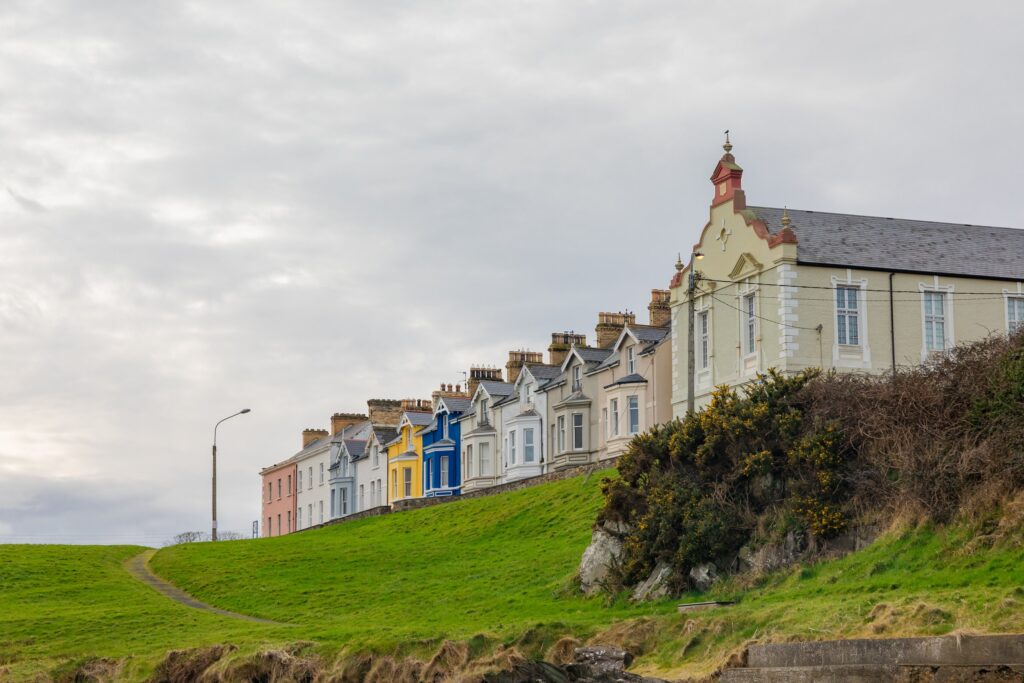
In a county famous for dramatic coastlines and rugged beauty, Dunfanaghy stands out not for size or spectacle, but for something rarer: balance. This small village on Donegal‘s northern coast manages to offer stunning natural landscapes, rich history, excellent food, and a genuine welcome—all without the crowds that descend on Ireland’s more famous destinations.
Watch: the latest film
Where Do the Most Common Irish Surnames Come From?
Perched on the edge of Sheephaven Bay with Horn Head looming to the north and the Derryveagh Mountains rising inland, Dunfanaghy has been drawing visitors since the 19th century. But unlike many coastal villages that have grown into tourist hubs, this one has kept its character intact. The main street still feels like a real working village, where locals outnumber visitors even in summer.
The Beaches That Define the Area
Dunfanaghy’s greatest asset is its collection of beaches, each with its own character. Killahoey Beach sits right at the village edge—a wide crescent of golden sand backed by dunes and the distinctive Killahoey Strand caravan park. The water here is clear and surprisingly swimmable on calm days, though the Atlantic chill never quite leaves.
A short drive west brings you to Marble Hill Strand, a spectacular beach that curves for nearly a mile beneath the cliffs of Marble Hill. The sand here is fine and white, and at low tide the beach expands into a vast playground. Families spread out across the dunes, walkers follow the shoreline toward Ards Forest Park, and on weekends you’ll often see horses being exercised along the water’s edge.
But the real treasure is Tramore Beach, accessed via a narrow road through the dunes. This is where locals go—a wild, windswept stretch of sand that faces straight into the Atlantic. When the surf is up, it’s a favorite with experienced surfers. When it’s calm, it’s one of the most peaceful spots in Donegal.
Horn Head and the Coastal Walks
The Horn Head loop is one of Ireland’s most spectacular coastal drives, but it’s even better on foot. The seven-mile circuit follows narrow roads that hug cliffs rising over 600 feet straight from the sea. On a clear day, you can see from Tory Island to the west all the way to the mountains of Scotland to the northeast.
The cliffs themselves are home to massive seabird colonies. From May through July, the ledges fill with guillemots, razorbills, kittiwakes, and puffins. The noise and smell are overwhelming in the best possible way—this is nature at full volume. Peregrine falcons nest here too, and if you’re lucky, you’ll catch one hunting along the cliff face.
For a shorter walk, the Ards Forest Park trail system offers easier terrain with equally beautiful views. The trails wind through mature woodland before emerging onto headlands overlooking Sheephaven Bay. The walk to the old Mass rock and famine graveyard provides both natural beauty and a sobering reminder of Ireland’s difficult past.
The Village and Its Surroundings
Dunfanaghy village itself is compact—you can walk end to end in five minutes. But those few streets contain some excellent spots. The Mill Restaurant and Accommodation, housed in a converted 19th-century flax mill, serves some of the best food in northwest Donegal, with a focus on local seafood and Donegal lamb. The Rusty Oven bakery turns out sourdough and pastries that rival anything in Dublin, and their breakfast baps have a devoted local following.
Just outside the village, the Dunfanaghy Workhouse Heritage Centre tells the story of the Great Famine through the lens of this single institution. The exhibition doesn’t shy away from the harsh realities of workhouse life, and the restored building itself—cold, institutional, designed to discourage rather than comfort—speaks volumes about 19th-century attitudes toward poverty.
Nearby, McSwyne’s Gun is a natural blowhole that fires spectacular plumes of seawater during storms. The walk out to it from Pollaguill Bay is easy and beautiful, passing through an area rich in archaeological sites including standing stones and early Christian settlements.
Why It Matters Now
In an Ireland where many coastal villages are struggling with overtourism or declining populations, Dunfanaghy has found a sustainable middle ground. It’s prosperous enough to support good restaurants, shops, and services, but hasn’t been overwhelmed by development. You can still get a pint in Arnold’s Hotel and strike up a genuine conversation with locals. The beaches remain clean and uncrowded. The walking trails are well-maintained but not manicured into theme-park versions of wilderness.
This is partly geography—Donegal is far enough from Dublin and the main tourist routes to remain slightly off the beaten path. But it’s also the result of a community that values what it has and hasn’t tried to become something it’s not. Dunfanaghy isn’t trying to be Dingle or Doolin. It’s simply being itself, and that’s enough.
The village works as a base for exploring the wider northwest—it’s an easy drive to Glenveagh National Park, the sea cliffs of Slieve League, and the craft studios and galleries scattered throughout Donegal. But it’s also a place worth settling into for a few days, walking the beaches at different tides, taking the Horn Head loop in different weather, and discovering why the regulars keep coming back year after year.
Ready to explore more of Ireland’s hidden gems? Download the free guide “The Ireland Bucket List: 25 Places That Will Stop You In Your Tracks” and discover the places that make Ireland unforgettable. And for stunning Irish landscapes and village life, watch the Love Ireland channel on YouTube.