
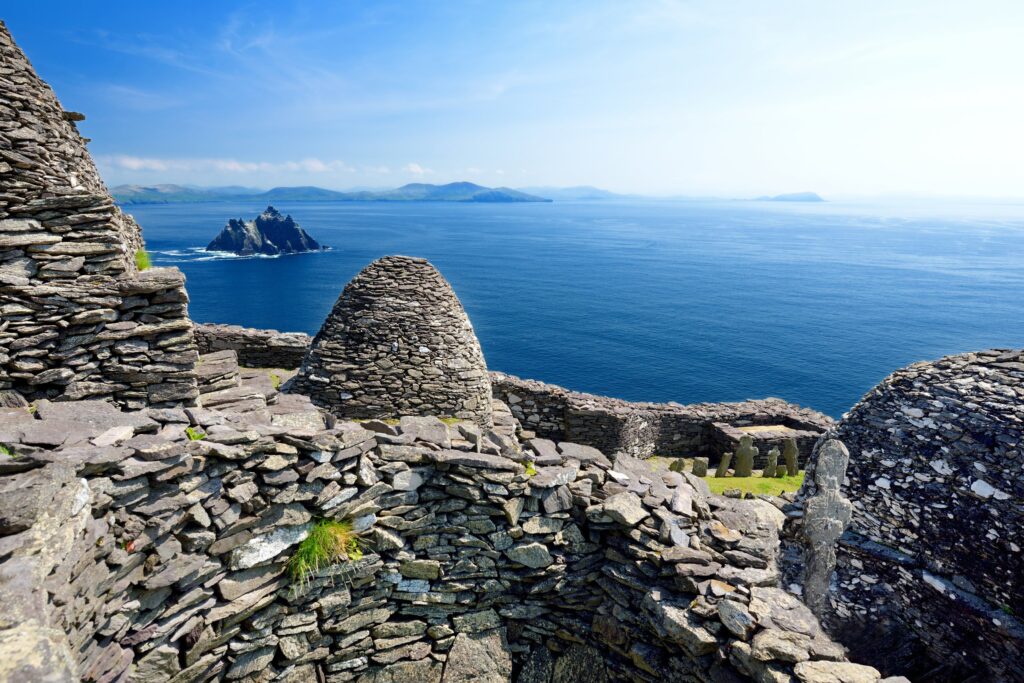
Eight miles off the Kerry coast, two jagged pyramids of rock pierce the Atlantic sky. Skellig Michael and Little Skellig have stood here for 400 million years, but it’s what happened on the larger island between the 6th and 12th centuries that makes this one of the most extraordinary historical sites in Ireland.
Watch: the latest film
The Irish County Names: What All 32 Mean
A community of monks carved out an existence on this windswept pinnacle, building a monastery 600 feet above the crashing waves. What they left behind—beehive huts, stone staircases, and terraced gardens clinging to impossible slopes—tells a story of devotion, endurance, and isolation that few other places can match.
The Monastery That Defied the Elements
Skellig Michael’s monastic settlement wasn’t built for comfort. The monks who established themselves here around the 6th century chose this remote outcrop precisely because it removed them from the distractions of the world. They climbed more than 600 stone steps—some barely wide enough for a single person—to reach their clifftop community.
Six beehive cells made from unmortared stone still stand today, their corbelled roofs designed to shed rain while withstanding Atlantic gales. These clochans are architectural marvels, built with such precision that they’ve survived for over a millennium. Each cell is small and dark inside, with just enough room for a stone sleeping platform and a tiny window.
The monastery also includes two oratories where the monks prayed, several stone crosses, and terraced gardens where they grew vegetables in soil carried up from the sea. Everything on Skellig Michael was built to last, and everything required backbreaking labor to construct.
Getting to the Skelligs
Visiting Skellig Michael requires planning and a bit of luck with the weather. Boat tours run from Portmagee, Ballinskelligs, and Cahersiveen between May and September, weather permitting. The crossing takes about an hour and can be rough—the Atlantic doesn’t offer gentle passages.
Tours cost around $100 to $120 per person, and landings on Skellig Michael are limited to preserve the site. Only 180 visitors are allowed per day, and boats must be booked well in advance—often months ahead for summer dates. Once you land, you’ll have about two and a half hours on the island, enough time to climb to the monastery and explore the ruins.
The climb itself is not for everyone. The stone steps are steep, uneven, and without handrails. Some sections are exposed, with dizzying drops to the ocean below. But for those who make the ascent, the reward is immense: standing among structures built by hand over 1,400 years ago, with nothing but sky, stone, and sea in every direction.
Why the Skelligs Matter
Skellig Michael was designated a UNESCO World Heritage Site in 1996, recognized as one of the most important examples of early Christian monasticism in Europe. The site represents the extreme edge of religious devotion during the early medieval period—a time when Irish monks sought God in the most remote and inhospitable places they could find.
The monastery was abandoned in the 12th century, likely due to climate deterioration and Viking raids, though pilgrims continued to visit for centuries afterward. Today, the Office of Public Works maintains the site with minimal intervention, preserving the stones and steps while allowing the elements to continue their slow work.
Little Skellig, the smaller island nearby, can’t be landed on but is worth the view from the boat. It’s home to one of the largest gannet colonies in the world—over 30,000 breeding pairs create a white blanket across the rock face from spring through summer. The sight and sound of tens of thousands of seabirds wheeling around the cliffs is unforgettable.
What to Know Before You Go
Even if you’ve booked a tour, there’s no guarantee you’ll land. Rough seas, high winds, or poor visibility can cancel trips at short notice. Tour operators will refund or reschedule, but it’s wise to allow flexibility in your Kerry itinerary if Skellig Michael is a priority.
Wear layers and bring waterproof clothing—conditions change quickly on the water and on the island. Sturdy, grippy footwear is essential for the climb. There are no facilities on Skellig Michael, so bring water and snacks, and be prepared to carry out everything you bring.
If you can’t secure a landing permit or prefer to stay on solid ground, boat tours around the islands still offer remarkable views and the chance to see the monastery from the water. The Skellig Experience visitor center in Portmagee provides excellent context with exhibits, artifacts, and a short film about the monks and their island home.
Skellig Michael isn’t an easy place to reach, and that’s exactly the point. The monks who built their lives here weren’t looking for convenience. They were looking for something beyond the everyday world, and they found it on a rock in the Atlantic. More than a thousand years later, that sense of awe and otherworldliness remains intact.
Ready to explore more of Ireland’s most unforgettable places? Download the free guide The Ireland Bucket List: 25 Places That Will Stop You In Your Tracks at irishvideos.com/subscribe, and watch the Love Ireland channel on YouTube at youtube.com/@LoveIreland for stunning visuals from across the island.