
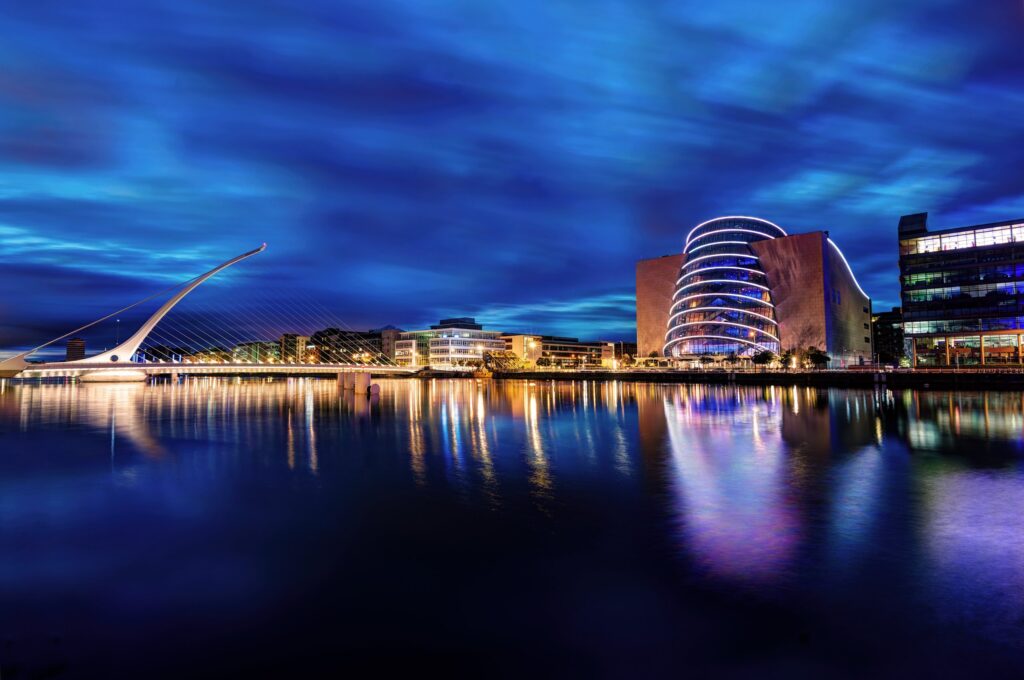
Walk into any Irish pub, flip open a passport, or pick up a can of Guinness, and you’ll see it: the Irish harp. It’s more than an instrument. It’s a national emblem, a link to Ireland‘s ancient past, and a symbol that appears on everything from government seals to euro coins. But unlike many national symbols, the harp isn’t just decorative—it’s still played, still cherished, and still central to Irish music and identity.
Watch: the latest film
The Irish County Names: What All 32 Mean
The story of how a musical instrument became the soul of a nation is one worth knowing.
A Symbol Older Than Most Nations
The Irish harp, or cláirseach, has been part of Irish life since at least the 10th century. Medieval manuscripts show harpers entertaining kings and chieftains, their music woven into the fabric of Gaelic society. Harpers held a privileged place—they were poets, historians, and musicians rolled into one, traveling between courts and composing songs that celebrated victories, mourned losses, and kept oral traditions alive.
The most famous of these harps still exists. The Trinity College Harp, also known as the Brian Boru Harp, sits in the Long Room of Trinity College Dublin. Dating to the 14th or 15th century, it’s made of oak and willow, with 29 brass strings. Though it’s named after the High King Brian Boru, it was actually built centuries after his death. Still, it remains the model for Ireland’s official harp symbol—the one you see on passports, coins, and the presidential seal.
What makes the Irish harp unique is its design. Unlike the larger concert harps used in orchestras, the traditional Irish harp is smaller, with a curved pillar and a resonant, metallic sound. The strings were originally made of brass or bronze, giving the instrument a bright, shimmering tone that could carry across a hall or a hillside.
From Suppression to Survival
The harp’s prominence made it a target. During the 17th century, as English rule tightened its grip on Ireland, the harp became a symbol of resistance. Harpers were seen as keepers of Gaelic culture, and their music was viewed as subversive. Some were persecuted, their instruments destroyed, and the tradition nearly disappeared.
But it didn’t. The harp survived in quieter corners, passed down through families and small communities. By the 18th century, it experienced a revival, championed by collectors and musicians who understood its cultural importance. In 1792, the Belfast Harp Festival brought together ten of the last traditional harpers, including the legendary Turlough O’Carolan, whose compositions are still performed today. The festival was a turning point—an effort to preserve what might otherwise have been lost forever.
That resilience is part of why the harp resonates so deeply. It’s not just a symbol of Ireland’s past, but of survival, adaptation, and pride.
The Harp in Irish Music Today
Today, the Irish harp is very much alive. You’ll hear it in concert halls, at festivals, and in trad sessions across the country. Modern players like Laoise Kelly, Máire Ní Chathasaigh, and Cormac De Barra have pushed the instrument into new territory, blending traditional melodies with contemporary styles.
If you want to hear the harp in its element, visit the National Concert Hall in Dublin or catch a performance at a festival like the Fleadh Cheoil. You’ll also find it played in more intimate settings—small venues in Galway, Ennis, or Westport, where the sound can fill a room and stop conversations mid-sentence.
Learning to play the harp has also seen a resurgence. Music schools across Ireland now teach the cláirseach, and workshops welcome beginners who want to try their hand at this ancient craft. There’s something profoundly moving about plucking those strings and hearing the same notes that echoed through medieval halls centuries ago.
Where to See the Harp’s Legacy
If you’re traveling through Ireland and want to connect with the harp’s story, start at Trinity College Dublin. Seeing the Brian Boru Harp up close is a powerful experience—it’s smaller than you’d expect, worn by time, and utterly beautiful.
The National Museum of Ireland in Dublin also has a collection of historic harps, including examples from the 17th and 18th centuries. And if you’re in the west, the Bunratty Folk Park in County Clare often features live harp performances in its recreated 19th-century village.
You’ll also notice the harp everywhere you go. It’s on street signs, carved into pub facades, stamped on your pint glass, and printed on every piece of Irish currency. It’s a quiet reminder that music isn’t just something Ireland does—it’s something Ireland is.
The Irish harp doesn’t just represent Ireland. It sounds like Ireland—melodic, resilient, and timeless. Whether you’re listening to a centuries-old tune or watching a young musician breathe new life into the tradition, the harp connects past and present in a way few symbols can.
Ready to discover more of Ireland’s music, culture, and heritage? Download the free guide The Ireland Bucket List: 25 Places That Will Stop You In Your Tracks at irishvideos.com/subscribe, and be sure to watch the Love Ireland channel on YouTube at youtube.com/@LoveIreland for videos that bring the island to life.