
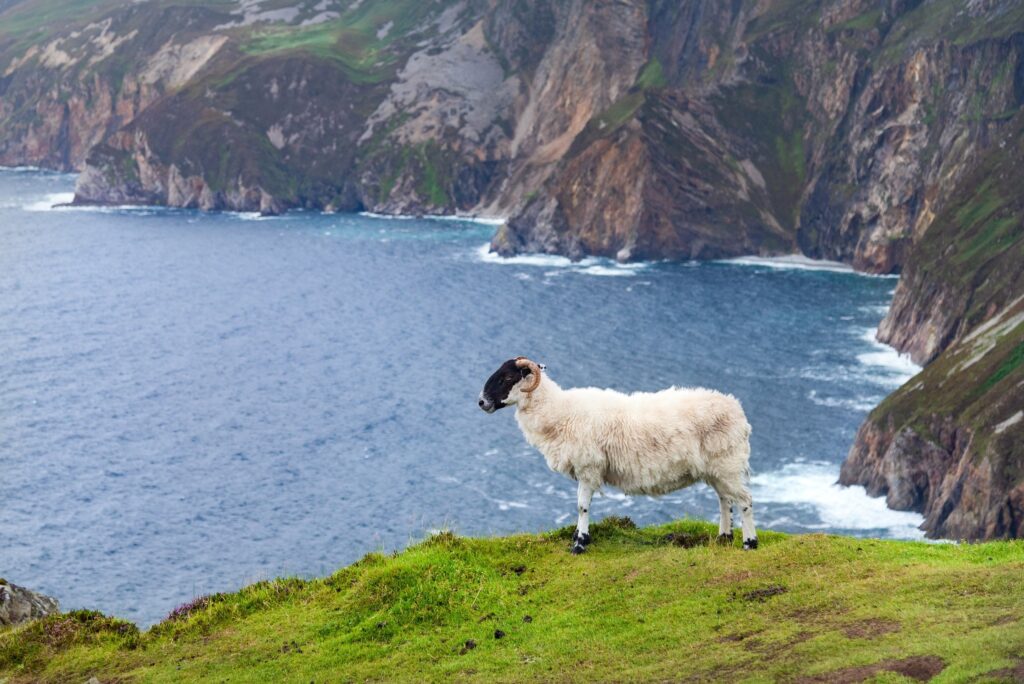
The Cliffs of Moher get the postcards and the tour buses, but venture north to County Donegal and you’ll discover something even more dramatic: Slieve League, rising nearly three times higher at 1,972 feet above the Atlantic Ocean. These are among the tallest sea cliffs in Europe, yet they remain refreshingly uncrowded compared to their famous southern cousins.
Watch: the latest film
The Irish County Names: What All 32 Mean
What makes Slieve League special isn’t just the height. It’s the raw, untamed feeling of standing on the edge of Ireland‘s northwest corner, where the land plunges into the churning Atlantic with nothing between you and North America but open ocean. On a clear day, the views stretch from Sligo Bay to the islands of Arranmore and Tory, with the Bluestack Mountains rising behind you.
Two Ways to Experience the Cliffs
Most visitors approach from the village of Teelin, where a narrow road winds up to Bunglas, the main viewing point. From the upper car park, it’s a short walk to the cliff edge where the sheer drop takes your breath away. The rock face changes color throughout the day as light shifts across layers of quartzite and schist, glowing gold at sunset.
For the more adventurous, the Pilgrim’s Path starts from the lower car park at Bunglas and follows an ancient route once walked by pilgrims heading to a chapel on the summit. This 4.5-mile hike takes you along the cliff edge to One Man’s Pass, a narrow ridge with steep drops on both sides that’s not for those with a fear of heights. The path continues to the summit of Slieve League mountain itself, where a small stone cross marks the spot where pilgrims once prayed.
The hike typically takes three to four hours round trip, and conditions can change quickly. Bring layers, waterproofs, and sturdy boots. The exposed nature of the terrain means high winds are common, even on days that start calm.
Why Slieve League Stays Under the Radar
Part of what keeps Slieve League quieter is its location. Donegal sits in Ireland’s far northwest, off the main tourist circuits between Dublin, Galway, and Cork. Getting here requires commitment: it’s a solid three-hour drive from Galway or four from Dublin. But that distance is exactly what preserves the cliff’s wild character.
There’s no visitor center, no cafés perched on the cliff edge, no buses arriving every fifteen minutes. What you get instead is the sound of waves crashing 2,000 feet below, the cry of seabirds, and the wind carrying the salt smell of the Atlantic. It’s the Ireland that existed before mass tourism, and it’s worth every mile of the journey.
When to Visit and What to Know
Summer offers the longest daylight and the most stable weather, but expect occasional rain even in July and August. Spring and autumn bring fewer visitors and dramatic light, though conditions can be more challenging. Winter visits are possible but require extra caution as ice and strong winds can make the paths treacherous.
The nearby village of Carrick offers accommodation and traditional pubs, while Killybegs, Ireland’s largest fishing port, sits just fifteen minutes east. After your cliff walk, stop at Ti Linn Café in Carrick for seafood chowder and brown bread, or head to the Rusty Mackerel in Teelin for local stories and Guinness.
If you’re driving the Wild Atlantic Way, Slieve League makes a natural stopping point between Sligo and the dramatic coastline of northern Donegal. Combine it with a visit to Glencolmcille Folk Village or the stunning beaches at Maghera and Assaranca.
The View That Changes You
Standing at Slieve League’s edge does something to you. The scale is almost impossible to process until you’re there: the vertical drop, the massive sweep of cliff face, the Atlantic spreading endlessly west. Seabirds that look like specks far below are actually gulls and razorbills riding thermals. Waves that seem gentle from this height are crashing with tremendous force on the rocks.
It’s humbling in the best way, a reminder of nature’s power and your own smallness within it. Unlike more developed sites, there’s space here to find your own spot, to sit quietly, to let the place work its magic without rushing to the next selfie point.
Slieve League rewards those who make the journey with something increasingly rare: a genuine sense of discovery, of finding a place that still feels like a secret even though it’s been here forever.
Ready to explore more of Ireland’s most stunning destinations? Download our free guide, The Ireland Bucket List: 25 Places That Will Stop You In Your Tracks, and watch breathtaking videos of Ireland’s landscapes on the Love Ireland channel on YouTube.