
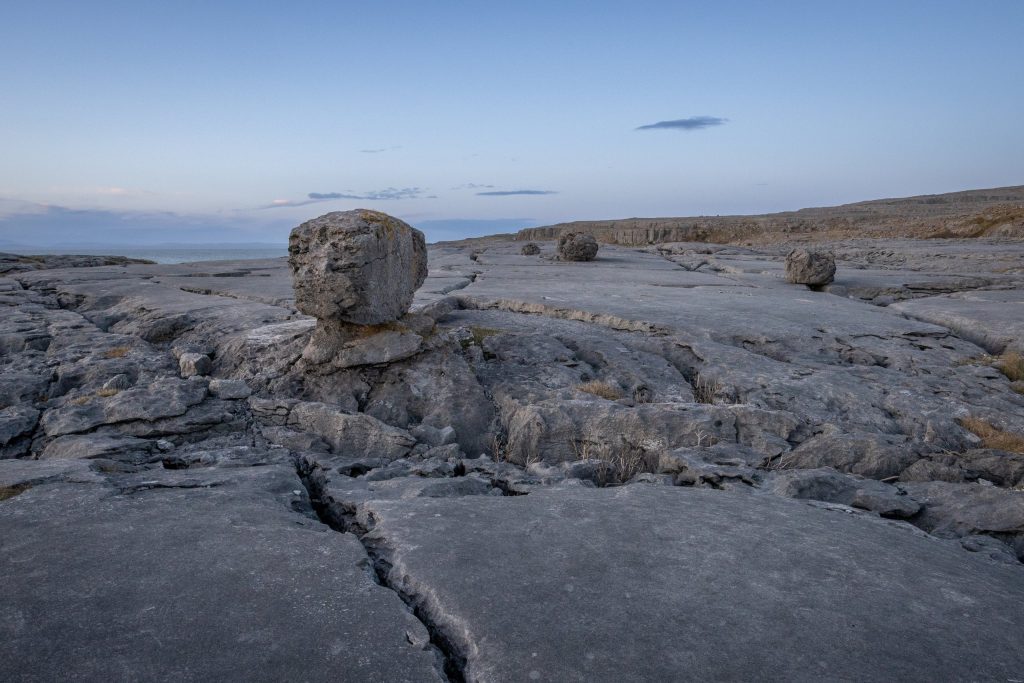
The Burren doesn’t look like the Ireland of postcards. There are no rolling green hills or rain-soaked valleys here. Instead, you’ll find a stark, silver-gray limestone plateau stretching across nearly 100 square miles of north County Clare, cracked into geometric patterns and dotted with boulders left behind by glaciers. It’s been called a lunar landscape, a rock desert, and one of the strangest and most beautiful places on the island.
Watch: the latest film
Dun Aonghasa: The Irish Fort With No Back Wall (True Story)
The name comes from the Irish Boíreann, meaning “great rock” or “stony place.” One of Oliver Cromwell’s men famously described it as a place with “not enough water to drown a man, wood enough to hang one, nor earth enough to bury him.” But beneath the barren surface, the Burren is alive with hidden valleys, underground rivers, rare flora, and thousands of years of human history.
A Landscape Shaped by Ice and Water
The Burren’s limestone formed about 350 million years ago from the shells and skeletons of sea creatures compressed on the ocean floor. Ice Age glaciers later scraped the surface clean, creating the exposed pavement you see today. Rainwater, slightly acidic, dissolved the limestone over millennia, carving deep fissures called grikes and leaving raised blocks called clints.
This process also created one of Europe’s most extensive karst systems. Water vanishes underground through sinkholes and reappears in turloughs—seasonal lakes that fill in winter and dry in summer. The Burren has more than 70 of these ephemeral lakes, along with hundreds of caves, including the Aillwee Cave near Ballyvaughan, where visitors can walk through underground rivers and past ancient bear dens.
Wildflowers in the Cracks
The Burren is famous for its botanical paradox. Arctic-alpine plants like mountain avens grow alongside Mediterranean species like maidenhair fern—plants that shouldn’t coexist. More than 70 percent of Ireland’s native flora is found here, including 23 of the country’s 27 native orchid species.
The secret lies in the grikes. These fissures trap warmth, shelter plants from wind, and hold pockets of soil. In May and June, the gray stone explodes with color: purple orchids, yellow rockrose, blue spring gentian, and the delicate white blooms of burnet rose. Walking across the Burren in late spring feels like discovering a hidden garden in the stone.
The best way to understand this is on foot. The Burren Way, a 71-mile walking trail, crosses the plateau from Ballyvaughan to Lahinch. Shorter loops around Mullaghmore Mountain or the Green Road near Fanore offer stunning views without committing to a multi-day trek.
Ancient Monuments in Stone
Humans have lived on the Burren for more than 6,000 years, and they left their mark. The plateau holds over 70 megalithic tombs, 500 ring forts, and dozens of early Christian churches and high crosses.
The Poulnabrone Dolmen, just off the R480 road, is the most iconic. This portal tomb, built around 3800 BC, consists of three upright stones supporting a massive capstone. It stands alone on a limestone terrace, visible for miles. Archaeologists found the remains of more than 30 people buried beneath it, along with tools and jewelry.
Nearby, the Caherconnell Stone Fort is a remarkably preserved ring fort dating to around 950 AD. You can walk through its walls and chambers, then watch sheepdog demonstrations at the adjacent farm. At Corcomroe Abbey, a 12th-century Cistercian monastery tucked into a green valley, you’ll find carved capitals showing flowers that still grow on the Burren today.
Where to Start Your Visit
The Burren National Park, centered around Mullaghmore, is free to explore and offers marked trails through the heart of the landscape. The park covers about 3,700 acres and includes some of the best examples of limestone pavement and turloughs.
Stop at the Burren Centre in Kilfenora to get oriented. The exhibits explain the geology, ecology, and archaeology in clear detail, and the staff can recommend walks based on your interests and fitness level. Kilfenora is also home to the Cathedral of St. Fachtnan and its collection of high crosses, including the famous Doorty Cross.
For food, Linnane’s Lobster Bar in New Quay serves fresh seafood with views over Galway Bay. In Ballyvaughan, the Tea and Garden Rooms at Gregans Castle Hotel offers lunch with panoramic Burren views. If you’re staying overnight, the coastal village of Fanore gives easy access to both the plateau and the Wild Atlantic Way.
The Burren rewards slow exploration. Take the small roads between Ballyvaughan and Corofin, pull over when something catches your eye, and walk into the stone. You’ll find silence, wildflowers, and a landscape unlike anywhere else in Ireland.
If Ireland has a hold on you, two things are worth your time. First, our free guide The Ireland Bucket List — 25 places that will stop you in your tracks, sent straight to your inbox. Second, the Love Ireland channel on YouTube, where we tell the stories behind these places in short films.