
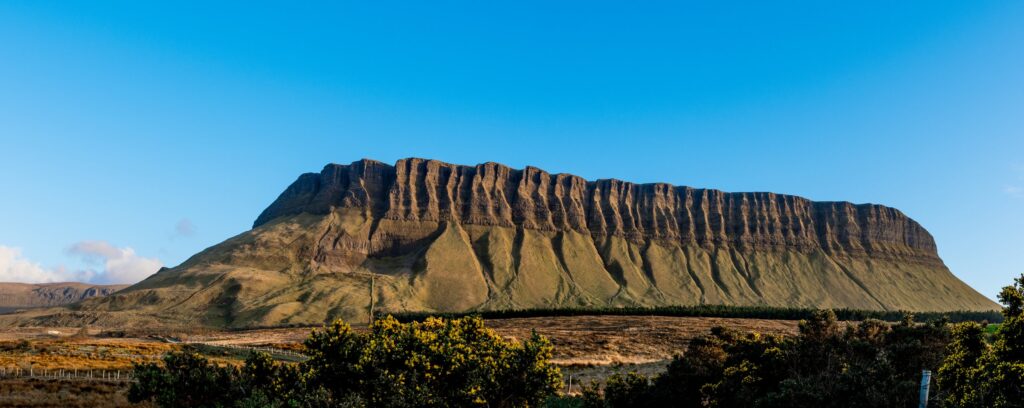
Sligo sits in the northwest corner of Ireland, caught between the Atlantic and the shadow of Benbulben mountain. It’s a place where poetry, landscape, and everyday life still meet on equal terms — where W.B. Yeats found his muse, and where visitors today find a quieter, deeper kind of Irish experience.
Watch: the latest film
Dun Aonghasa: The Irish Fort With No Back Wall (True Story)
Sligo Town itself is compact and walkable, with a working harbor, good pubs, and none of the tourist crush you’ll find in Galway or Killarney. But it’s what lies just beyond the town that makes this region unforgettable.
Benbulben and Drumcliff Churchyard
Benbulben dominates the skyline north of Sligo — a flat-topped mountain that looks like it was carved with a knife. Yeats called it “bare Ben Bulben’s head,” and he’s buried at its foot in Drumcliff Churchyard, just off the N15.
The grave is simple: a limestone headstone with his self-penned epitaph, “Cast a cold eye / On life, on death. / Horseman, pass by!” The churchyard itself dates back to the sixth century, built on the site of a monastery founded by St. Columba. There’s a high cross and round tower stump still standing.
You can hike Benbulben from the Gortarowey trailhead — it’s a steep scramble, not a casual walk, but the views from the plateau are staggering. On clear days, you’ll see Donegal Bay, Knocknarea, and half the northwest coast.
Sligo Town: Music, Museums, and the Garavogue
Back in town, start at the Yeats Memorial Building on Hyde Bridge, home to the Yeats Society. It hosts exhibitions, readings, and the annual Yeats International Summer School every August. Even if you’re not a literature devotee, the building gives context to why this place mattered so much to Ireland’s greatest poet.
The Model, Sligo’s contemporary art gallery, sits on the Mall and punches well above its weight. It showcases Irish visual art alongside international work, and admission is free. Just across the river, you’ll find narrow streets lined with independent shops, cafés, and pubs where trad sessions happen most nights without fanfare.
Hargadon’s on O’Connell Street is the classic Sligo pub — dark wood, snugs, and Guinness poured the way it should be. For traditional music, try Shoot the Crows or McLynn’s. Sessions here feel local, not performative.
Carrowmore and Knocknarea
Just west of town lies Carrowmore Megalithic Cemetery, one of the largest and oldest Stone Age sites in Ireland. More than 30 tombs remain, some dating back over 5,000 years. You can walk among the passage tombs and dolmens, with Knocknarea mountain looming in the background.
Knocknarea itself is worth the climb — a steep but manageable hike to the massive cairn at the summit, said to be the grave of Queen Maeve, the legendary warrior queen of Connacht. The cairn has never been excavated, so the legend persists. The 360-degree views from the top take in Sligo Bay, Benbulben, and the Ox Mountains.
Strandhill and Rosses Point
If you want coast, head to Strandhill, a surf village on the Atlantic edge just a few miles from Sligo Town. The beach is wild and not safe for swimming, but it’s one of Ireland’s best surf spots. The village has a laid-back vibe, with the Strand Bar serving seafood chowder and pints after a day on the water.
On the opposite side of the bay, Rosses Point is quieter — a small seaside village with two golf courses, a sailing club, and long walks along the shore. Yeats spent childhood summers here, and you can still feel what drew him back in memory.
Why Sligo Matters
Sligo doesn’t shout. It doesn’t need to. It offers something rarer than spectacle — a sense of place that runs deep, where myth and landscape are still alive in the everyday. Whether you’re standing at Yeats’s grave, walking among prehistoric tombs, or listening to a tune in a quiet pub, you’re touching something that feels both ancient and immediate.
It’s Ireland without the performance, and that’s exactly why it belongs on your list.
If Ireland has a hold on you, two things are worth your time. First, our free guide The Ireland Bucket List — 25 places that will stop you in your tracks, sent straight to your inbox. Second, the Love Ireland channel on YouTube, where we tell the stories behind these places in short films.