Ireland’s food scene has quietly become one of Europe’s most exciting, and nowhere is that more visible than at the country’s growing roster of food festivals. From the Galway International Oyster Festival to Dingle Food Festival and Taste of Dublin, these gatherings spotlight artisan producers, traditional recipes reimagined, and the ingredients that make Irish cuisine so distinctive.
Watch: the latest film
Dun Aonghasa: The Irish Fort With No Back Wall (True Story)
If you’re planning to visit one this year or next, here’s what to look for—and taste—when you arrive.
Seafood Straight From the Source
Ireland’s coastline delivers some of the finest seafood in the world, and festivals are where you’ll taste it at its freshest. At the Galway Oyster Festival, held every September, you can sample native oysters from Clarinbridge and beyond, shucked to order and served with nothing more than a squeeze of lemon and a pint of stout. The briny sweetness is unforgettable.
Look also for smoked salmon from Burren Smokehouse or Ummera, mackerel pâté, Dublin Bay prawns, and chowder made with haddock, mussels, and cream. Coastal festivals in Cork, Donegal, and Kerry often feature crab claws, scallops seared in butter, and lobster rolls that rival anything you’ll find across the Atlantic.
Farmhouse Cheese and Artisan Dairy
Irish cheesemaking has experienced a renaissance over the past few decades, and food festivals are your chance to meet the makers. Seek out Durrus, a washed-rind cheese from West Cork with a creamy, earthy flavor. Try Cashel Blue, Ireland’s original farmhouse blue cheese, or Gubbeen, another Cork classic with a pink rind and rich, buttery texture.
Many festivals feature cheese boards paired with Irish chutneys, oatcakes, and local honey. You’ll also find fresh butter from grass-fed cows, tangy yogurt, and cream so thick it barely pours. Don’t be shy—ask the cheesemakers about their process. They’re proud of their craft and happy to share.
Craft Spirits and Irish Gin
While Irish whiskey remains the star, the country’s craft distilling movement has exploded in recent years. At festivals, you’ll find small-batch gins like Dingle Original, infused with local botanicals including rowan berry, fuchsia, and heather. Drumshanbo Gunpowder Irish Gin, with its oriental twist, and Micil from Galway, made using a recipe passed down through generations of poitín distillers, are also worth seeking out.
Many festivals host tasting tents where you can sample whiskey flights from newer distilleries like Teeling, Dingle, and Echlinville, alongside the classics—Jameson, Redbreast, and Powers. Pair a dram with a square of dark chocolate or a slice of porter cake for the full experience.
Baked Goods and Sweet Treats
Ireland’s baking traditions are alive and well at food festivals. You’ll find brown bread still warm from the oven, barmbrack studded with raisins and soaked in tea, and apple tarts with buttery shortcrust pastry. Look for stalls selling fudge from places like Maureen’s in Killarney, honeycomb toffee, and salted caramel made with Irish butter and Achill Island sea salt.
Scones are everywhere—plain, fruit, or cheese—and they’re best eaten fresh with a smear of jam and clotted cream. Some vendors offer gluten-free versions of traditional bakes, so there’s something for everyone.
Hot Food and Festival Classics
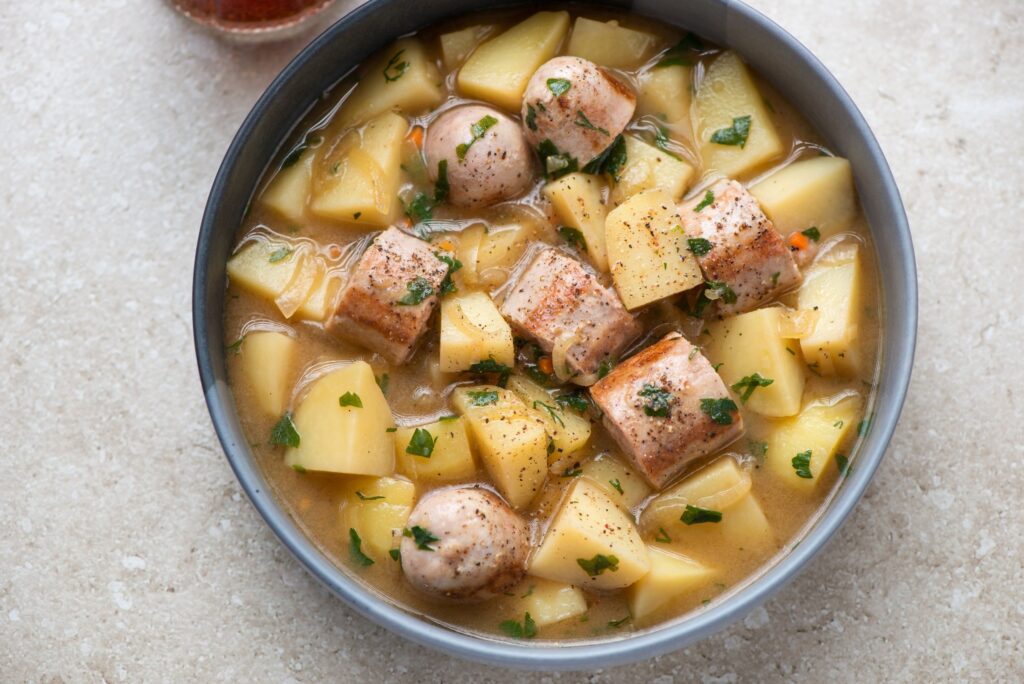
When hunger strikes, follow the smell of sizzling pork from a hog roast, or grab a bowl of Irish stew made with lamb, carrots, potatoes, and parsley. You’ll also find gourmet sausages, black pudding from Clonakilty, bacon cooked over an open flame, and beef burgers from heritage breed cattle.
Vegetarian and vegan options have improved dramatically in recent years. Look for wild mushroom risotto, boxty filled with roasted vegetables, and soups made from foraged nettles or locally grown roots. Many festivals now include international influences—Thai curries made with Irish lamb, wood-fired pizza topped with Gubbeen chorizo—but the best ingredients are always local.
Why It Matters
Irish food festivals aren’t just about eating well—they’re about connection. You’ll meet farmers, bakers, fishermen, and distillers who take pride in what they do. You’ll hear stories about land, weather, and tradition. And you’ll taste the difference that care and quality make.
Whether you’re visiting Dingle in October, Waterford in September, or any of the dozens of smaller festivals held in towns and villages across the country, come hungry. Come curious. And bring cash—not all stalls take cards, though most now do.
If Ireland has a hold on you, two things are worth your time. First, our free guide The Ireland Bucket List — 25 places that will stop you in your tracks, sent straight to your inbox. Second, the Love Ireland channel on YouTube, where we tell the stories behind these places in short films.