
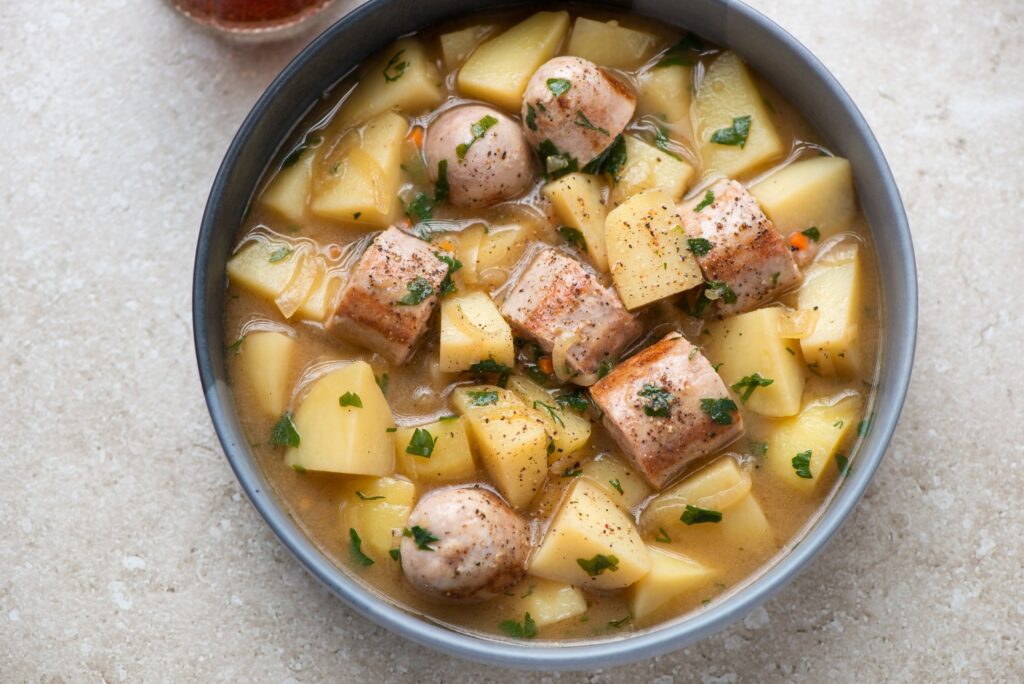
There’s a reason Irish stew has sustained families across Ireland for generations. This humble one-pot dish—traditionally made with just mutton, potatoes, onions, and water—represents everything essential about Irish cooking: honest ingredients, patient preparation, and flavors that improve with time.
Watch: the latest film
The Irish County Names: What All 32 Mean
Walk into any good Irish kitchen on a cold afternoon and you’ll likely smell it simmering. The aroma of slow-cooked lamb, sweet onions, and earthy potatoes fills the room with a warmth that goes beyond temperature. Irish stew isn’t fancy, but it doesn’t need to be. Its power lies in simplicity done right.
The Traditional Recipe and Regional Variations
The most authentic Irish stew uses neck of lamb or mutton, potatoes, onions, and nothing else. No carrots, no Guinness, no stock cubes—just meat, vegetables, salt, pepper, and water. The long, gentle cooking draws out every bit of flavor from the bones and transforms simple ingredients into something remarkable.
That said, you’ll find variations across Ireland. In Kerry, some cooks add a handful of pearl barley for extra body. Cork kitchens might include carrots and turnips. Dublin versions sometimes use beef instead of lamb. Each family guards their own recipe, passed down through generations with small modifications that make it uniquely theirs.
The key is the cooking time. Rush it and you get tough meat and bland broth. Give it three hours of gentle simmering and the lamb falls off the bone while the potatoes begin to break down, naturally thickening the liquid into a rich, creamy sauce.
Where to Find Outstanding Irish Stew
While homemade stew remains the gold standard, several Irish establishments serve versions worth seeking out. The Winding Stair in Dublin makes theirs with Wicklow lamb and serves it in traditional earthenware bowls. Ard Bia at Nimmos in Galway offers a contemporary take that honors the classic recipe while adding subtle modern touches.
In Kenmare, County Kerry, P.F. McCarthy’s serves a stew that locals swear by—made from a recipe unchanged in over forty years. The portions are generous, the lamb is local, and they serve it with thick slices of brown bread for soaking up every drop.
Head to Nancy’s Bar in Ardara, County Donegal, and you’ll find stew on the menu year-round, made by the same family who’ve run the pub since 1897. They use Donegal mountain lamb, and the flavor reflects the wild herbs the sheep graze on.
Making Irish Stew at Home
If you want to make authentic Irish stew yourself, start with bone-in lamb neck or shoulder—about two pounds for four people. Cut it into chunks, leaving the bones in for flavor. Layer the meat with sliced onions and thickly sliced potatoes in a heavy pot. Season generously with salt and pepper between layers.
Add just enough water to barely cover everything. Bring it to a gentle simmer, cover tightly, and cook low and slow for at least two and a half hours. Resist the urge to stir too often—you want some of those potatoes to dissolve into the liquid while others hold their shape.
The stew is ready when the meat pulls apart easily and the broth has thickened naturally. Some cooks add fresh parsley or thyme in the last thirty minutes, but purists keep it simple. Serve it in deep bowls with plenty of crusty bread or soda bread on the side.
Why This Dish Endures
Irish stew tells the story of making much from little. It emerged from necessity—using affordable cuts of meat, vegetables that grew easily in Irish soil, and cooking methods that stretched ingredients and fuel. But what started as peasant food became beloved comfort food for everyone.
There’s something deeply satisfying about a dish that can’t be rushed or faked. You can’t achieve the same result in thirty minutes with shortcuts. Irish stew demands patience, and in return, it delivers layers of flavor that only slow cooking can create.
In restaurants from Temple Bar to Donegal, in farmhouse kitchens across the Midlands, and in modern Dublin apartments, Irish stew remains a staple. It connects contemporary Ireland to its past, proving that the best recipes don’t need improvement—just respect for the ingredients and the time to do them justice.
Whether you’re warming up after a day exploring the Wild Atlantic Way or seeking authentic Irish flavors at home, a bowl of proper Irish stew offers something no other dish quite captures: the taste of Ireland itself, simple and true.
For more authentic Irish experiences and hidden gems across the island, download our free guide “The Ireland Bucket List: 25 Places That Will Stop You In Your Tracks” at irishvideos.com/subscribe. And watch stunning videos of Ireland’s landscapes, culture, and traditions on the Love Ireland channel on YouTube.