
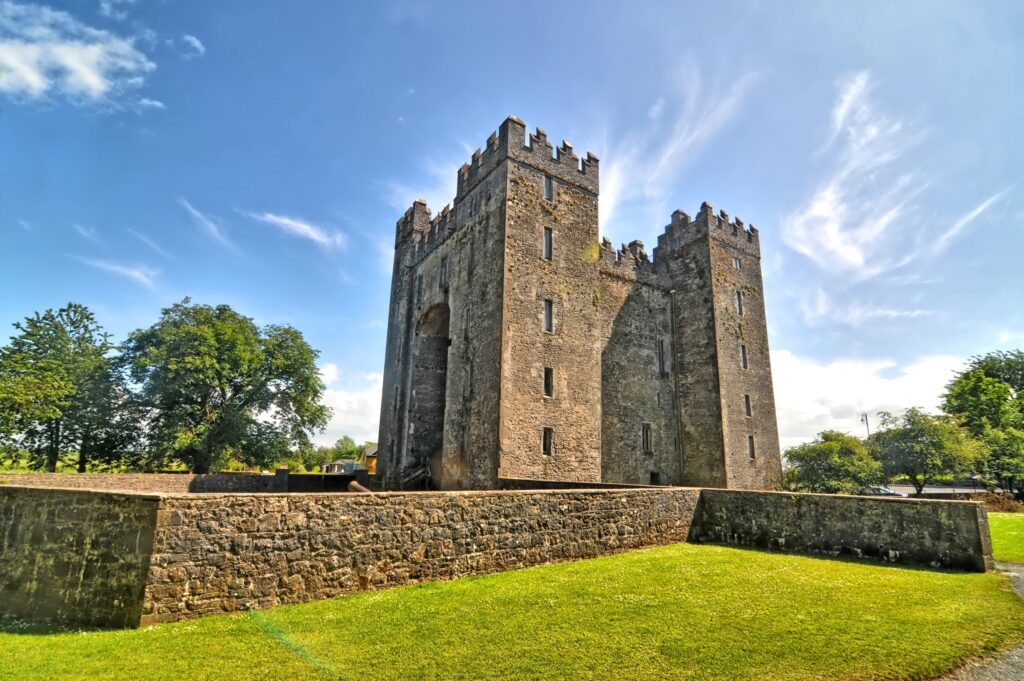
Most visitors to County Clare know Bunratty Castle, but the 26-acre folk park that spreads out behind it offers something even more intimate: a complete 19th-century Irish village brought back to life. This is where you can walk dirt roads between authentically furnished cottages, watch blacksmiths work their forges, and smell fresh soda bread baking over an open hearth.
Watch: the latest film
The Irish County Names: What All 32 Mean
Bunratty Folk Park isn’t a theme park. It’s a carefully reconstructed village that draws from actual buildings relocated from across Ireland, rebuilt stone by stone and thatch by thatch. Every structure has a story, and together they tell the broader tale of how ordinary Irish people lived, worked, and gathered before the modern age arrived.
What You’ll Find in the Village
The folk park contains more than 30 buildings arranged as a living village complete with a main street. You’ll find a post office, a doctor’s house, a draper’s shop, and several pubs including Mac’s Bar and Durty Nelly’s reproduction. Each building is furnished with period-appropriate items: butter churns, settles, dressers filled with delph, and oil lamps that would have lit long winter evenings.
The cottages range from a one-room laborer’s dwelling with a dirt floor to a more substantial farmhouse with separate sleeping quarters. The contrast reveals the class divisions that shaped rural Irish life. In the Golden Vale House, you’ll see how a comfortable farming family lived, with a parlor reserved for special occasions. In the mountain farmhouse, the entire family would have shared a single room with their animals housed just beyond a thin wall.
Staff members dressed in period clothing work throughout the village, demonstrating traditional skills. You might watch a woman carding wool by hand, a carpenter shaping an ash handle for a spade, or a farmer feeding hens that wander freely through the yards. They’re happy to answer questions and explain how each task was done.
The Walled Garden and Working Farm
Behind the village sits a formal Victorian walled garden where vegetables, herbs, and flowers grow in neat rows just as they would have in a big house kitchen garden. The gardeners here use heritage seed varieties and traditional methods, growing the same types of potatoes, cabbages, and carrots that sustained Irish families generations ago.
The working farm features Irish breeds that were common in the 19th century: Kerry cows, Connemara ponies, Irish goats, and chickens scratching in the dirt. Children especially love this area, where animals roam in fields bordered by traditional stone walls and hedgerows. It’s a reminder that for most Irish people, farm animals weren’t pets but essential partners in survival.
Seasonal Demonstrations and Events
Throughout the year, Bunratty Folk Park hosts demonstrations of traditional Irish crafts and seasonal work. You might catch a sheepdog demonstration, watch turf being cut and stacked for fuel, or see how flax was processed into linen thread. During harvest time, staff demonstrate how grain was cut with scythes and threshed by hand, backbreaking work that consumed entire communities.
The park also celebrates traditional Irish festivals. On May Day, you might see a decorated May Bush outside the cottages. At Halloween, carved turnip lanterns appear in windows, the original jack-o’-lanterns before Irish emigrants to America switched to pumpkins. At Christmas, the village takes on a particularly atmospheric quality with holly wreaths on doors and candles in windows.
Planning Your Visit
Bunratty Folk Park is located just off the N18 between Limerick and Ennis, about 15 minutes from Shannon Airport. Admission costs around $19 for adults, with family tickets available. The park is typically open from 9:00 AM to 5:30 PM, though hours vary by season, so check ahead.
Give yourself at least two to three hours to explore properly. The site involves considerable walking on uneven surfaces and gravel paths, so wear comfortable shoes. Many of the cottages have low doorways and steep stairs, authentic to the period but requiring care.
The park is rarely crowded in the morning, making early arrival ideal for photography and unhurried conversations with the demonstrators. Most tour groups arrive mid-morning and depart by early afternoon. If you visit on a quiet weekday in spring or autumn, you might have entire cottages to yourself, making it easier to imagine stepping back in time.
The tearoom near the entrance serves simple meals and snacks, but many visitors prefer to bring a picnic to enjoy in the gardens when weather permits.
Why It Matters
Bunratty Folk Park preserves a way of life that vanished within living memory. For Irish visitors, especially older ones, these buildings and tools spark personal memories of grandparents’ houses and childhood visits to farms still operating the old way. For international visitors, it offers context for understanding Irish emigration, the Great Famine, and the rural traditions that shaped Irish identity.
This isn’t history sanitized or simplified. The cottages reveal both the hardship and the ingenuity of Irish rural life, the close quarters that fostered strong community bonds, and the physical demands that shaped bodies and shortened lives. Walking through these spaces makes Irish history tangible in ways no museum display quite can.
Ready to discover more of Ireland’s essential places and experiences? Download our free guide “The Ireland Bucket List: 25 Places That Will Stop You In Your Tracks” at irishvideos.com/subscribe, and watch stunning Irish landscapes and culture on the Love Ireland channel at youtube.com/@LoveIreland.