
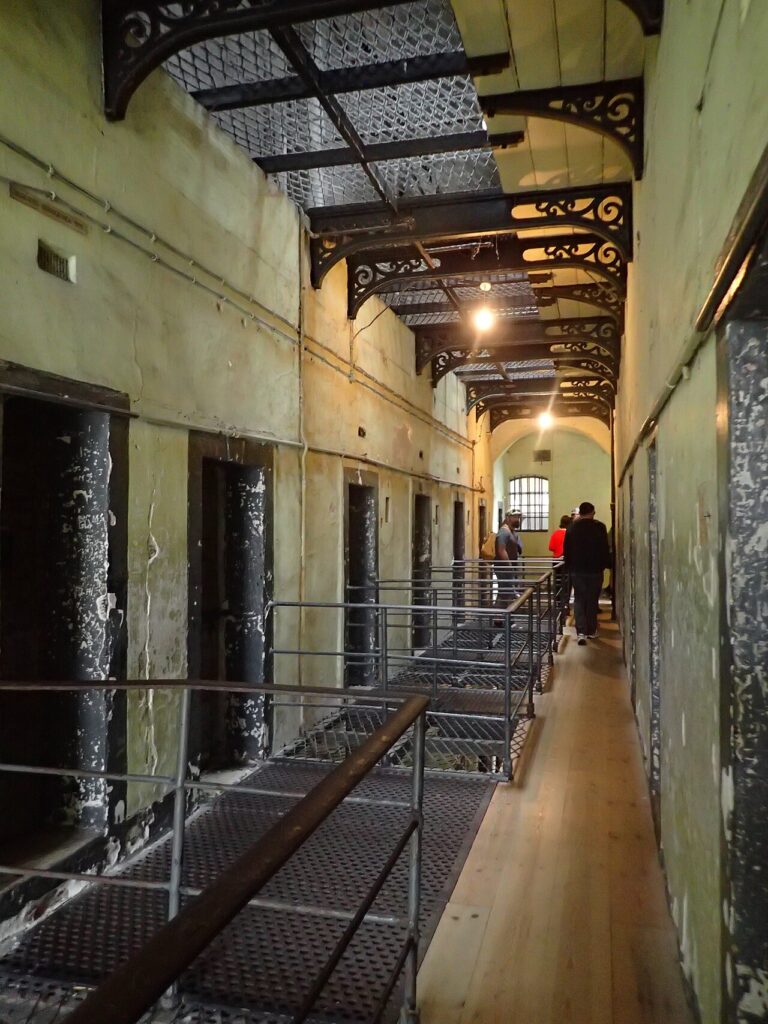
There are places in Ireland that tell stories through stone and silence, and Kilmainham Gaol in Dublin is one of the most powerful. This former prison, now a museum, stands as a testament to Ireland’s turbulent journey toward independence. Walking through its corridors is like stepping into the pages of Irish history itself.
Watch: the latest film
The Irish County Names: What All 32 Mean
Built in 1796, Kilmainham Gaol held everyone from petty criminals to political prisoners over its 128 years of operation. But it’s the prison’s role in the struggle for Irish independence that makes it essential viewing for anyone who wants to understand modern Ireland.
The Easter Rising and Its Aftermath
The most significant chapter in Kilmainham’s history unfolded in May 1916, following the Easter Rising. Fourteen of the rebellion’s leaders were executed by firing squad in the Stonebreakers’ Yard behind the prison. These executions, carried out over ten days, transformed public opinion and became a turning point in Ireland’s fight for independence.
The guided tour takes you to the yard where these executions took place. Standing there, you can see the spot where James Connolly, too injured to stand, was tied to a chair and shot. It’s a sobering moment that connects you directly to events that shaped a nation.
The prison also held other notable figures including Robert Emmet, executed in 1803 for leading a rebellion, and Charles Stewart Parnell, the 19th-century political leader. During the Irish Civil War, Kilmainham housed both Free State and Republican prisoners, including Éamon de Valera, who would later become President of Ireland.
The Victorian Wing and Prison Conditions
The East Wing, completed in 1862, represents Victorian prison architecture at its most austere. The three-story hall of individual cells is lit by a glass roof, creating an eerie beauty that masks the harsh conditions prisoners endured. Each tiny cell held one person in complete isolation—a punishment considered progressive at the time but devastating in practice.
Children as young as seven were imprisoned here for minor crimes like stealing food. Women were held in cramped conditions with their children. The exhibits document these stories with artifacts, photographs, and first-hand accounts that bring the human cost into sharp focus.
The tour guides—many of them historians in their own right—share details you won’t find in textbooks. They’ll tell you about the prison chapel where Joseph Plunkett married Grace Gifford just hours before his execution, or how prisoners scratched messages into the limestone walls that remain visible today.
Planning Your Visit
Kilmainham Gaol is located about two miles west of Dublin city center in the suburb of Kilmainham. You can reach it by bus (routes 13, 40, and 69) or take a pleasant 30-minute walk from the center along the Liffey.
Entry is by guided tour only, and these book out weeks in advance during peak season. Tours run every 30 minutes and last about 70 minutes. Adult admission is around $8, with reduced rates for seniors, students, and children. Book online through the official Heritage Ireland website to secure your spot.
The tour involves climbing stairs and standing for extended periods, so wear comfortable shoes. Photography is allowed in most areas, but be respectful—this is a place where real people suffered and died for their beliefs.
After your tour, spend time in the museum exhibits on the ground floor. These displays provide context about Irish political history, the conditions of Victorian-era imprisonment, and the prison’s restoration, which began in the 1960s after decades of abandonment.
Why It Matters Today
Kilmainham Gaol closed as a working prison in 1924, just as the Irish Free State was being established. Its last prisoner was Éamon de Valera, released as part of the transition to independence. The building stood empty and deteriorating until volunteers began restoration work in 1960, opening it as a museum in 1966 to mark the 50th anniversary of the Easter Rising.
Today, over half a million people visit each year, making it one of Ireland’s most popular heritage sites. It’s a place that doesn’t shy away from difficult truths about occupation, rebellion, sacrifice, and the cost of freedom. Whether you have Irish roots or simply appreciate history told honestly, Kilmainham Gaol offers an experience that stays with you long after you leave.
Ready to explore more of Ireland’s unmissable sites? Download the free guide “The Ireland Bucket List: 25 Places That Will Stop You In Your Tracks” at irishvideos.com/subscribe. And for virtual tours and Irish travel inspiration, watch the Love Ireland channel on YouTube at youtube.com/@LoveIreland.