
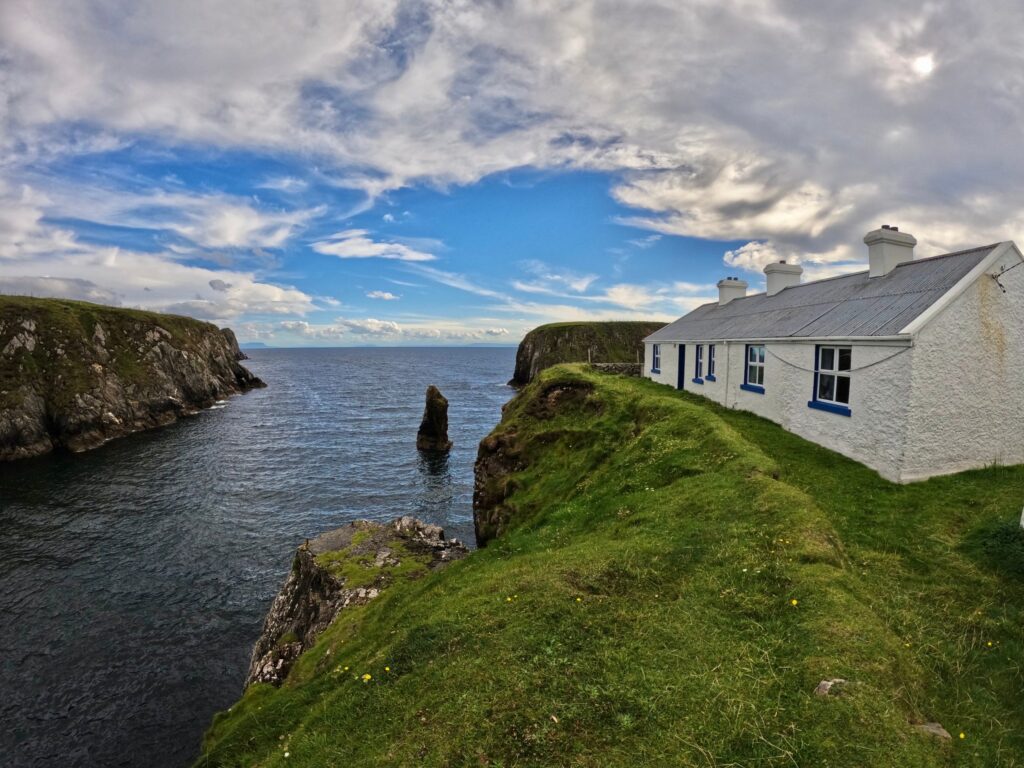
Drive through rural Ireland and you’ll spot them tucked into the landscape: whitewashed cottages with thick roofs of golden straw, smoke curling from chimneys, windows framed in bright paint. These thatched cottages aren’t just picturesque relics. They’re living monuments to centuries of Irish building tradition, climate adaptation, and community craft.
Watch: the latest film
The Irish County Names: What All 32 Mean
Once the standard dwelling across the island, thatched roofs are now rare and treasured. But the cottages that remain tell stories about how Irish people lived, worked, and built homes that breathed with the land.
Why Thatch Was the Roof of Choice
Before slate and tile became common in the 19th century, thatch was practical, affordable, and locally sourced. Farmers harvested wheat straw, oat straw, or reeds from nearby wetlands, bundled them tight, and layered them thick over timber frames. A well-thatched roof could last 20 to 30 years and kept homes surprisingly warm in winter and cool in summer.
The thick layers—often 12 inches or more—provided natural insulation. Smoke from the turf fire inside actually helped preserve the thatch by deterring insects and fungi. Rainwater ran off the steep pitch, and the straw absorbed moisture without rotting if maintained properly.
Thatching was a skilled trade passed down through families. Master thatchers used hazel rods, called scollops, to secure the straw in place, creating patterns and ridge styles unique to different regions. In some areas, ropes weighted with stones held the thatch down against Atlantic gales. In others, thatchers wove intricate designs along the roof peak.
Where to See Authentic Thatched Cottages Today
Though thousands once dotted the countryside, only a few hundred traditional thatched cottages remain occupied. You’ll find clusters in the west and southwest, particularly in counties Clare, Kerry, Galway, and Donegal.
The village of Adare in County Limerick is famous for its picturesque row of thatched cottages along the main street, many now housing cafés and craft shops. It’s touristy, but the cottages are lovingly maintained and give a clear sense of the style.
For a more authentic experience, drive the back roads of the Dingle Peninsula. Between Dingle town and Dunquin, you’ll pass working farms with cottages still under thatch, their whitewashed walls gleaming against green fields and the blue sweep of the Atlantic.
In Connemara, around Roundstone and Clifden, thatched cottages nestle into stony hillsides, many still heated by turf fires. The low-slung profile and thick walls of Connemara cottages were built to withstand fierce westerly winds.
The Ulster American Folk Park near Omagh and Bunratty Folk Park in County Clare both feature reconstructed thatched cottages furnished as they would have been in the 18th and 19th centuries. You can step inside, see the open hearth, the settle bed by the fire, the simple furniture, and imagine daily life under thatch.
The Craft and Cost of Keeping Thatch Alive
Maintaining a thatched roof isn’t easy or cheap. A full re-thatch can cost anywhere from $15,000 to $30,000, depending on size and materials. Finding a skilled thatcher is harder still—there are fewer than 100 active professional thatchers left in Ireland.
Organizations like the Irish Thatching Advisory Group work to preserve the craft by training new thatchers and advocating for grants to help homeowners maintain historic roofs. Some local authorities offer heritage grants, recognizing that thatched cottages are part of Ireland’s cultural fabric.
Despite the challenges, a growing number of people are restoring old thatched cottages, drawn by their beauty, sustainability, and connection to the past. Modern thatching uses treated straw and updated techniques to extend roof life, while still honoring traditional methods.
Why Thatched Cottages Still Matter
These cottages are more than charming backdrops for photographs. They represent a way of building that was local, renewable, and in harmony with the environment long before those concepts became buzzwords.
They’re also reminders of resilience. For centuries, Irish families raised children, farmed the land, and weathered hardship under roofs made from the grain they grew. The cottages that survive today—whether lived in, restored as holiday rentals, or preserved in folk parks—connect us to that history.
Next time you’re driving through the west of Ireland and see a thatched cottage, slow down. Notice the curve of the roof, the texture of the straw, the thick walls and small windows. You’re looking at a piece of living architecture that has sheltered generations and continues, against the odds, to endure.
Want to explore more of Ireland’s hidden stories and unforgettable places? Download the free guide The Ireland Bucket List: 25 Places That Will Stop You In Your Tracks at irishvideos.com/subscribe, and watch stunning videos of Ireland on the Love Ireland channel on YouTube.