
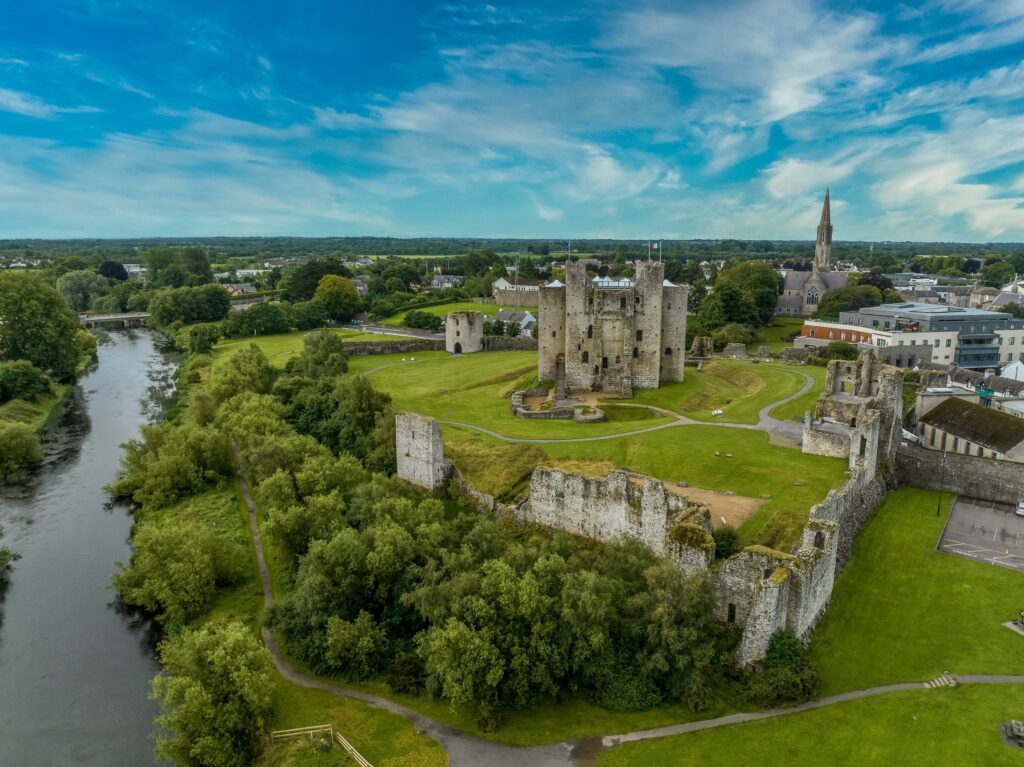
Few Irish legends capture the imagination quite like the tale of the Salmon of Knowledge. This ancient story, woven into the fabric of Irish mythology, connects the hero Fionn Mac Cumhaill to the mystical waters of the River Boyne and offers a window into how the ancient Irish understood wisdom, destiny, and the natural world.
Watch: the latest film
Dun Aonghasa: The Irish Fort With No Back Wall (True Story)
The Story of Fionn and the Salmon
According to the legend, a magical salmon lived in the pool of Fec’s Well on the River Boyne. This wasn’t any ordinary fish—it had eaten nine hazelnuts that fell from the Tree of Knowledge, granting it all the wisdom of the world. The poet Finegas spent seven years trying to catch this salmon, for it was prophesied that whoever ate it would gain infinite knowledge.
When Finegas finally caught the fish, he asked his young apprentice, Fionn Mac Cumhaill, to cook it but warned him not to eat any of it. While turning the salmon over the fire, Fionn burned his thumb on the hot skin. Instinctively, he put his thumb in his mouth to ease the pain—and in that moment, all the wisdom of the world flooded into him.
From that day forward, whenever Fionn needed insight or knowledge, he would suck his thumb and the answers would come to him. This wisdom helped him become the legendary leader of the Fianna, the famed band of Irish warriors.
The Boyne Valley: Where Myth Meets Landscape
The River Boyne in County Meath isn’t just the setting for this tale—it’s one of Ireland’s most mythologically significant waterways. The Boyne Valley is home to Brú na Bóinne, a UNESCO World Heritage site that includes the ancient passage tombs of Newgrange, Knowth, and Dowth, built over 5,000 years ago, predating the pyramids of Egypt.
Walking along the Boyne today, especially near the Battle of the Boyne site or through the rolling farmland around Slane, you’re treading the same ground that inspired countless Irish myths. The river winds through lush green countryside, past medieval abbeys and Norman castles, connecting the ancient past with the present.
Newgrange itself demonstrates the wisdom and astronomical knowledge of ancient Ireland. Its passage tomb is aligned so precisely that on the winter solstice, sunlight floods the inner chamber for exactly 17 minutes—a feat of engineering that still awes visitors today.
Why This Legend Still Matters
The Salmon of Knowledge isn’t just a children’s story. It reflects how the ancient Irish valued wisdom above physical strength, and how they saw knowledge as something earned through patience, apprenticeship, and sometimes accident. The salmon swimming upstream, the hazel tree bearing nuts, the sacred well—these natural elements were seen as pathways to understanding.
The legend also explains the Irish respect for poets and storytellers. Finegas wasn’t a warrior but a poet, and the story acknowledges that true power comes from knowledge and words as much as from swords. This tradition lives on in Ireland’s rich literary heritage, from the medieval manuscripts to modern Nobel laureates.
You’ll find references to the Salmon of Knowledge throughout Ireland today. The salmon appears in Celtic jewelry designs, pub names, and artwork. In Dublin, there’s even a sculpture called “Anna Livia” that celebrates the River Liffey and Ireland’s connection to water and myth.
Experiencing the Legend Today
Visiting the Boyne Valley offers a chance to step into this mythic landscape. The Brú na Bóinne Visitor Centre near Donore provides excellent context for the area’s prehistoric significance. Guided tours take you inside Newgrange’s chamber, where you can stand in the same darkness that Stone Age people experienced 5,200 years ago.
The nearby town of Slane offers riverside walks where you can imagine Finegas casting his line into the waters. Trim Castle, Ireland’s largest Anglo-Norman castle, sits just upstream and makes for a perfect afternoon exploration. The Hill of Tara, legendary seat of the High Kings of Ireland, is only a short drive away.
For a deeper dive, the Meath Heritage Centre and various local historians offer storytelling sessions and guided walks that bring these ancient tales to life. Many visitors time their trips to coincide with the winter solstice lottery for entry to Newgrange at dawn—a truly once-in-a-lifetime experience.
Whether you’re tracing Fionn’s footsteps along the Boyne or simply soaking in the atmosphere of Ireland’s Ancient East, these legends add depth and magic to every landscape. They remind us that in Ireland, the past is never really past—it flows through the land like the river itself, carrying stories from one generation to the next.
If Ireland has a hold on you, two things are worth your time. First, our free guide The Ireland Bucket List — 25 places that will stop you in your tracks, sent straight to your inbox. Second, the Love Ireland channel on YouTube, where we tell the stories behind these places in short films.