
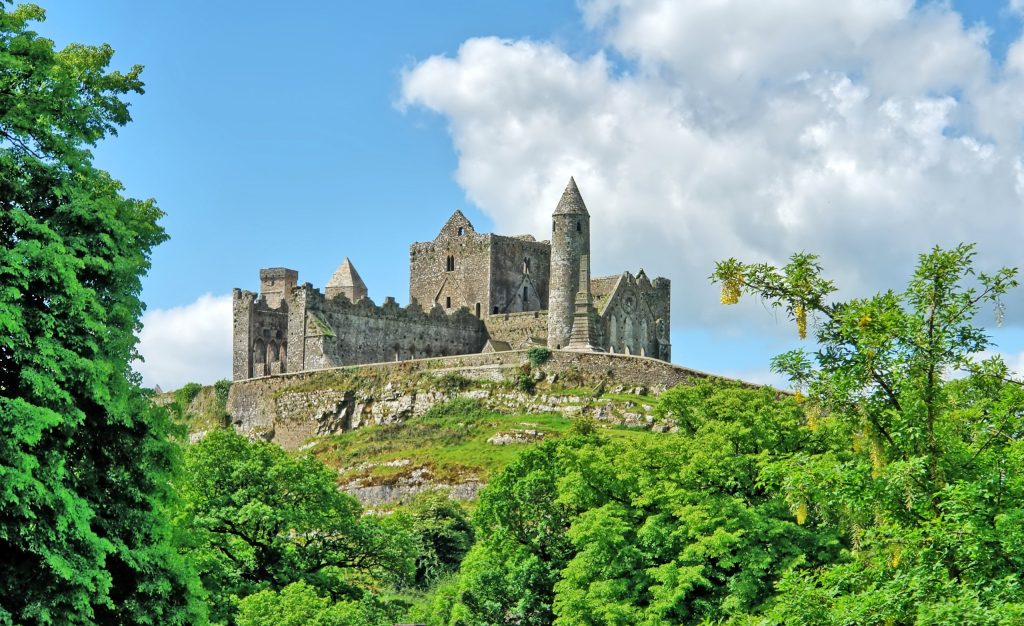
Few sights in Ireland command attention quite like the Rock of Cashel. Rising 200 feet above the Golden Vale in County Tipperary, this limestone outcrop crowned with medieval ruins has been a seat of power, a place of worship, and a symbol of Irish heritage for more than 1,500 years.
Watch: the latest film
The Irish County Names: What All 32 Mean
Whether you’re tracing your Irish roots, exploring Ireland’s ancient past, or simply chasing unforgettable landscapes, the Rock of Cashel delivers drama, history, and beauty in equal measure.
A Fortress Fit for Kings
The Rock of Cashel was the traditional seat of the Kings of Munster for centuries before the Norman invasion. According to legend, it was here that St. Patrick baptized King Aengus in the 5th century—accidentally driving his crosier through the king’s foot in the process. Aengus, believing the pain to be part of the ceremony, didn’t complain.
In 1101, King Muirchertach Ua Briain gifted the Rock to the Church, transforming it from a royal stronghold into an ecclesiastical center. What stands today is a remarkable collection of medieval architecture: a 12th-century round tower, a roofless 13th-century Gothic cathedral, a Romanesque chapel with some of Ireland’s oldest frescoes, and a 15th-century tower house.
The site was damaged during the Cromwellian wars in the 1640s and fell into ruin, but its bones remain magnificent—a skeletal monument to Ireland’s layered history.
What You’ll See When You Visit
Start with Cormac’s Chapel, built in 1134 and considered one of the finest examples of Romanesque architecture in Ireland. Look up: the barrel-vaulted ceiling and carved sarcophagus are stunning, and traces of medieval frescoes still cling to the walls.
The round tower, one of the best-preserved in the country, predates the chapel and served as both bell tower and refuge. The cathedral, though roofless, remains awe-inspiring with its soaring arches, Gothic lancet windows, and tomb effigies of archbishops and nobles.
Don’t miss the Hall of the Vicars Choral, a restored 15th-century building that houses original high crosses, including St. Patrick’s Cross, carved with intricate Celtic designs and scenes from scripture.
The views from the Rock are worth the visit alone. On a clear day, you can see across the patchwork fields of Tipperary to the Galtee Mountains in the south and the Devil’s Bit range to the north.
Practical Tips for Your Visit
The Rock of Cashel is located just outside the town of Cashel, about 90 minutes from both Cork and Limerick, and two hours from Dublin. Admission is around $10 for adults, with discounts for seniors and families. It’s managed by the Office of Public Works, and guided tours are included with entry—highly recommended for the stories and context they provide.
Plan to spend at least 90 minutes on site. Wear sturdy shoes; the ground is uneven, and you’ll be climbing stone steps. The site is partially accessible, though the chapel and upper cathedral levels involve stairs.
Visit early in the morning or later in the afternoon to avoid tour bus crowds, especially in summer. The light at these times also makes for spectacular photographs, particularly when the sun catches the limestone and casts long shadows across the ruins.
Cashel Town and Beyond
After exploring the Rock, spend time in Cashel town itself. It’s compact and charming, with independent shops, cozy cafés, and welcoming pubs. Stop by Davern’s or Feehan’s for a pint and a bowl of soup, or grab fresh pastries at one of the bakeries on Main Street.
If you have time, the nearby ruins of Hore Abbey—a 13th-century Cistercian monastery—sit in a field at the base of the Rock and make for a peaceful, less-visited stop. It’s free to enter and offers one of the best vantage points for photographing the Rock itself.
The Rock of Cashel is more than a ruin. It’s a place where myth and history merge, where stone and sky meet, and where the weight of Ireland’s past feels present and alive. It’s one of those rare sites that exceeds expectations—and stays with you long after you leave.
If Ireland has a hold on you, two things are worth your time. First, our free guide The Ireland Bucket List — 25 places that will stop you in your tracks, sent straight to your inbox. Second, the Love Ireland channel on YouTube, where we tell the stories behind these places in short films.