
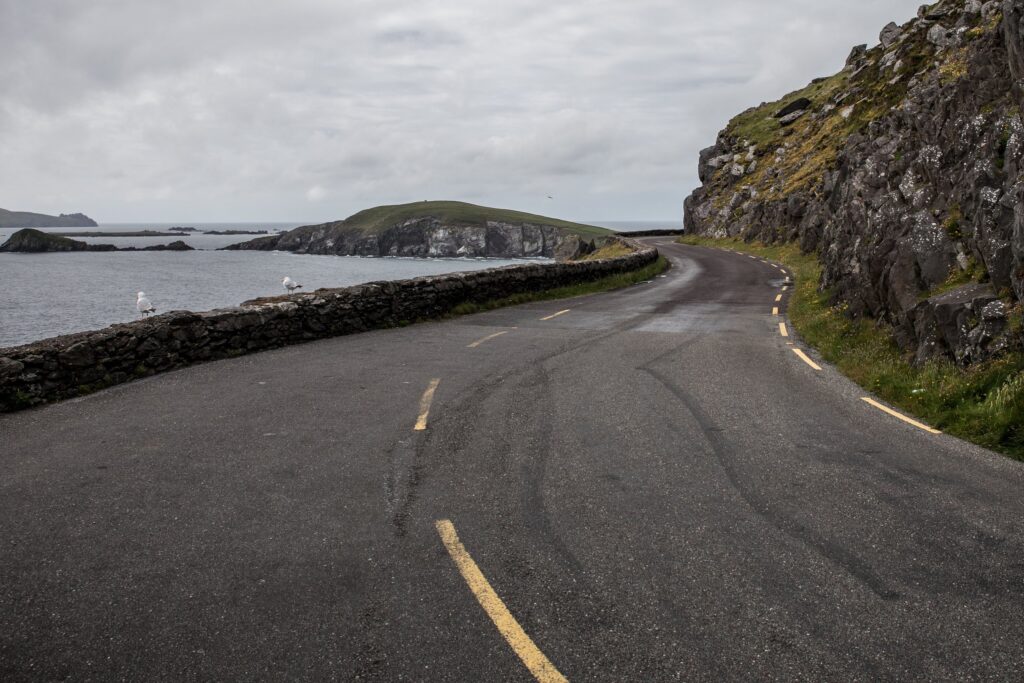
Wander through the west of Ireland and you’ll notice them everywhere: stone walls threading across hillsides, marking field boundaries, climbing impossible slopes. These aren’t just fences. They’re monuments to patience, skill, and an intimate understanding of the land that stretches back thousands of years.
Watch: the latest film
The Irish County Names: What All 32 Mean
Irish dry stone walls—built without mortar, relying solely on gravity and the mason’s eye—are one of the island’s most enduring yet overlooked treasures. They’re functional, beautiful, and so woven into the landscape that it’s easy to forget each one represents hours of careful work.
Where Stone Walls Tell Ireland’s Story
The Burren in County Clare hosts some of Ireland’s most spectacular examples. This lunar limestone landscape is crisscrossed by miles of pale grey walls that seem to grow from the rock itself. Many date back centuries, built when farmers cleared stones to create grazing land in one of Europe’s most unusual ecosystems.
The Aran Islands take dry stone craft to another level. On Inis Mór, Inis Meáin, and Inis Oírr, walls protect tiny fields from Atlantic winds and salt spray. Islanders built them by hand-carrying stones and creating pockets of soil where almost none existed. The result is a patchwork visible from the air—a testament to determination and ingenuity.
In Connemara, darker stone walls snake through bog and mountain, marking townland boundaries that have stood for generations. Each region’s walls reflect the local geology: grey limestone in the Burren, dark granite in the Mournes, warm sandstone in parts of Cork and Kerry.
How They’re Built to Last
A properly built dry stone wall can stand for centuries without maintenance. The secret lies in technique passed down through generations. Skilled wallers select each stone for shape and weight, fitting them together like a three-dimensional puzzle. Larger foundation stones anchor the base. Through-stones—long pieces that span the wall’s width—tie the structure together. The top is often finished with coping stones set on edge.
The beauty of the method is its flexibility. Without rigid mortar, the wall can shift slightly with ground movement, frost, or settling. Small gaps allow wind to pass through rather than pushing the wall over, crucial in Ireland’s blustery climate. These same gaps provide shelter for wildlife—wrens, lizards, and countless insects make homes in the crevices.
Today, dry stone walling is experiencing a revival. Organizations like the Dry Stone Wall Association of Ireland run workshops teaching traditional techniques. The craft is now on UNESCO’s Representative List of the Intangible Cultural Heritage of Humanity, shared with several other countries where the tradition thrives.
Walking Among the Walls
Some of Ireland’s best walks follow routes where dry stone walls are the main attraction. The Green Road near Fanore in the Burren is a former market route lined with ancient walls, offering views across Galway Bay. On the Aran Islands, walking from Kilronan to Dún Aonghasa means passing between walls barely wider than your shoulders, polished smooth by generations of hands.
The Beara Way and other sections of the Wild Atlantic Way showcase walls in dramatic coastal settings, where stone meets sea. In the Mourne Mountains, the Mourne Wall itself—though mortared—follows the tradition of massive stone construction, snaking 22 miles across fifteen peaks.
Why They Matter Now
In an age of quick-fix construction, dry stone walls represent something profound: work meant to outlast the maker. They’re carbon-neutral, require no manufactured materials, and improve with age. They’re living structures that support biodiversity while serving their original purpose.
For visitors, they’re a reminder that Ireland’s landscape isn’t purely natural—it’s shaped by human hands working with, not against, the land. Every wall you see represents someone’s knowledge of stone, weather, and place. They’re collaboration between person and geology that has quite literally stood the test of time.
Next time you’re driving the back roads of Clare, walking the hills of Connemara, or exploring an Aran island, take a moment to really look at the walls. Run your hand along the stones if you can. Feel the work, the weight, and the centuries in every carefully placed piece. These walls don’t just divide fields—they connect us to everyone who has ever called this island home.
If Ireland has a hold on you, two things are worth your time. First, our free guide The Ireland Bucket List — 25 places that will stop you in your tracks, sent straight to your inbox. Second, the Love Ireland channel on YouTube, where we tell the stories behind these places in short films.